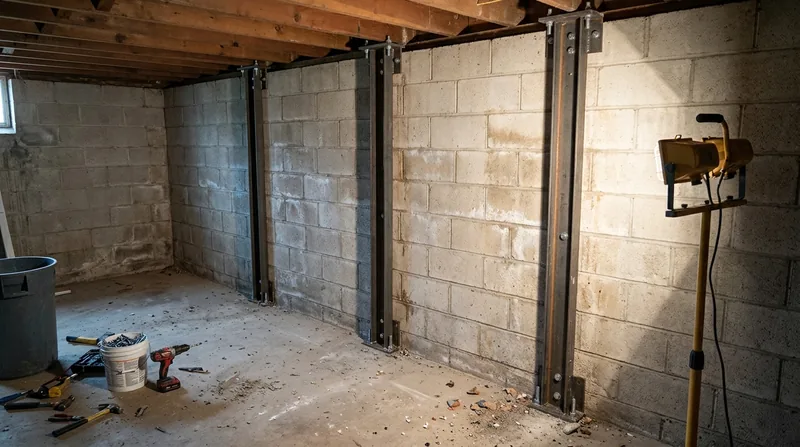


Bridgewater sits on Triassic red shale and sandstone, with diabase ridges to the north and clay loam in the Raritan River lowlands, and that geology is hard on foundation walls. The 1900s to 1930s houses in Bridgewater Center and Martinsville still carry stone and early block cellars, while the 1950s and 1960s split-levels in Bradley Gardens and Finderne have block walls holding back wet clay. When the water table stays high after a nor'easter and the ground freezes and thaws through February and March, Bowing Wall Repair in Bridgewater becomes a structural question, not a cosmetic one. We read the wall, measure the movement, and match the fix to the pressure behind it. Start with a free basement inspection and we will tell you plainly whether the wall needs stabilization now or can be monitored.
Why Bowing Walls Show Up So Often in Bridgewater's Older Blocks and Cellars
A bowing wall is almost always hydrostatic pressure at work. Saturated clay loam pushes against the wall, the wall deflects inward at mid-height, and the horizontal mortar joints open on the inside face. In Bridgewater the pattern is predictable: block walls from the 1950s and 1960s, and stone cellars from the 1800s, take the worst of it after a hard winter.
- Waterlogged clay soil behind the wall keeps pushing long after the rain stops.
- Freeze-thaw cycles open old mortar joints and let water reach the block cores.
- Clogged footing drains and weeping tile leave water sitting against the wall.
- Efflorescence and horizontal cracking at mid-wall are the early warning signs.
- Downspouts that dump next to the foundation add load the wall was never built for.
If you see a horizontal crack widening or the top of the wall pulling away from the joists, stop patching and get the wall assessed.
Key info: A block wall in Bradley Gardens that leaned 1.5 inches after the 2023 spring melt needed carbon fiber straps, not another coat of parging. The straps stopped the movement; the parging had only hidden it.
Structural repair permits in New Jersey are issued at the municipal level, and the rules vary by jurisdiction. Confirm requirements with the Bridgewater Township building department before work begins. The New Jersey Division of Codes and Standards publishes the statewide code framework local offices work from.
How We Diagnose and Stabilize a Bowing Wall in Bridgewater
We do not sell a system before we know what is moving the wall. The first visit is a measurement and a moisture read: plumb the wall, map the cracks, check the drain tile and the grading, and look at what the soil is doing after the last storm. Only then do we pick the method.
- We measure the deflection at mid-wall and record crack widths and locations.
- We check the footing drain, sump basin, and discharge line for blockage or failure.
- We identify the pressure source: hydrostatic load, freeze-thaw, or a failing drain.
- We match the repair to the severity, from carbon fiber straps to steel I-beams or wall anchors.
- We address the water with an interior drain tile system so the wall is not fighting the same load again.
- We document the before-and-after measurements and leave you a written scope.
Stabilizing the wall without relieving the water is half a job, and we say so on the estimate.
Key info: On a 1962 ranch in Finderne, the wall had moved 2 inches and the footing drain was crushed under the slab. We installed wall anchors and tied the repair to a new interior perimeter drain and sump basin, so the wall stopped moving and the basement stayed dry through the next nor'easter.
Repair Methods We Use and When Each One Fits
There is no single answer for every wall. The right method depends on how far the wall has moved, what the wall is made of, and whether the pressure is still active. This table is how we frame the decision on site.
| Approach | Description | Best for |
|---|---|---|
| Carbon fiber straps | Straps bonded vertically to the inside face to arrest movement. | Block walls with moderate bowing and no wall-floor separation. |
| Steel I-beams | Beams set against the wall and anchored to the floor and joists. | Larger deflections and walls that need active restraint. |
| Wall anchors | Plates outside tied to anchors inside to pull the wall back. | Walls that have moved and can be straightened over time. |
| Epoxy or polyurethane injection | Injection ports seal cracks and fill voids behind the wall. | Cracks that are letting water in but not moving the wall. |
Bowing Wall Repair Cost in Bridgewater: What to Expect
Pricing starts at $600 for a straightforward crack injection or a single strap repair, and climbs from there. The number depends on how far the wall has moved, the wall material, how many straps or beams are needed, and whether the water has to be managed first. A stone cellar in Martinsville and a poured wall in a 1990s colonial on the Route 22 corridor are different jobs.
Access matters too. A finished basement means moving framing and drywall, and a wall that needs anchors means excavation outside. We give a written scope so you can compare like for like, and we recommend two or three estimates on any structural work. See the full pricing overview for the range of work we do.
Key info: A homeowner in Bound Brook was quoted a full wall replacement. The wall had moved less than an inch, and carbon fiber straps plus a new footing drain solved it for a fraction of the cost. Get the diagnosis before you accept the big number.
Bowing Wall Repair Near Me: How to Vet a Contractor in Bridgewater
Structural work is not the place to hire on price alone. Ask for the license and insurance certificate, get the scope in writing, and call the references on jobs like yours. A contractor who cannot explain why your wall is moving is guessing.
- Confirm the company is licensed and insured for structural foundation work in New Jersey.
- Get two or three written estimates with the same scope so the numbers compare.
- Ask for references from Bridgewater jobs on block or stone walls, not just new construction.
- Ask who pulls the permit and confirm the local building department's requirements.
- Check HOA rules before any exterior excavation or anchor work.
When you are ready, contact us and we will schedule the inspection at a time that works for you.
For homeowners in the surrounding towns, we also cover Raritan and Bound Brook with the same approach.
Bowing Wall Repair in Bridgewater: Pricing Guide
| Service | Price | Details |
|---|---|---|
| Crack injection (single crack) | Starting at $600 | Epoxy or polyurethane injection with ports; price rises with crack length and access behind finishes. |
| Carbon fiber strap repair | Starting at $950 | Straps bonded to the wall face; cost moves with strap count and wall height. |
| Wall anchors or steel I-beams | On estimate | Larger deflections need an on-site measurement and an exterior excavation plan before pricing. |
| Drainage correction with wall repair | On estimate | Interior drain tile and sump work quoted with the structural repair when water is driving the movement. |
| Travel | Included | In Bridgewater and surrounding areas, no separate call-out or mileage fee. |
| Estimate | Free | Response within 24h at (908) 503-5451, no obligation to book. |
Indicative pricing, the exact cost depends on square footage, finish, and site access. Free personalized estimate within 24h at (908) 503-5451.


