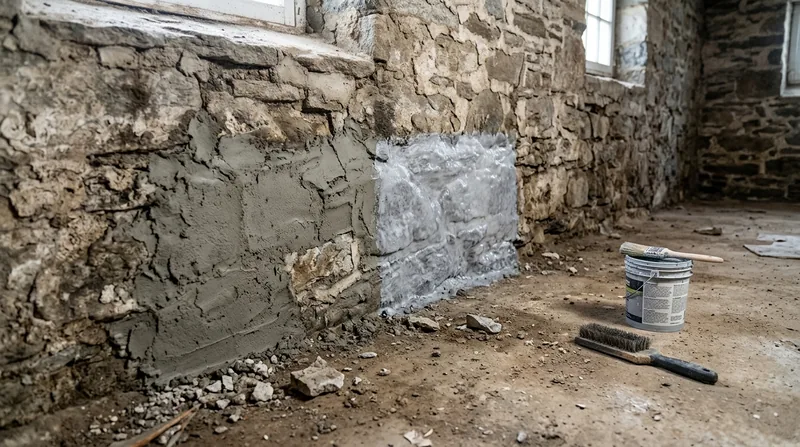


Bridgewater sits on Triassic red shale and sandstone, with diabase ridges to the north and clay loam down in the Raritan River lowlands where the water table stays high after every storm. That geology decides how water moves against your foundation. In Bridgewater Center and Martinsville, 1700s and 1800s farmhouses sit on stone and early block cellars with hand-laid mortar that freeze-thaw cycles open a little more each winter. Out in Bradley Gardens and Finderne, the 1950s and 1960s splits and ranches have block foundations and partly finished full basements that seep at the cove joint. Along the Route 22 corridor and the newer Green Knoll subdivisions, poured walls from the 1970s through the 2020s crack at shrinkage points and at tie holes. Foundation Waterproofing in Bridgewater starts with reading the foundation you actually have, not a one-size formula. We handle stone, block, and poured walls with the method each one needs, and we tell you plainly when simple crack sealing is enough and when hydrostatic pressure means the water has to be drained, not just plugged. Call (908) 503-5451 to set up a free basement inspection, or read our basement waterproofing service page for the full scope.
Why Foundation Waterproofing in Bridgewater Is a Different Job Street by Street
Bridgewater is not one soil condition. A house on the Martinsville ridge drains fast off shale and diabase, while a house two miles down in the lowlands sits in glacial clay that holds stormwater for days after a nor'easter. The failure mode follows the building stock: old stone cellars wick moisture through mortar joints, 1950s block walls seep at the cove joint and through porous block cores, and poured walls from the 1980s onward open at shrinkage cracks. Spring snowmelt and the remnants of tropical storms push the water table up fast, and that is when the calls come in.
- Stone and early block cellars in Bridgewater Center need repointing and parging matched to soft historic mortar, not a hard modern coat that traps moisture.
- Block foundations in Bradley Gardens and Finderne wick water through the cores, so sealing the face alone will not stop the seep.
- Poured walls along the Route 22 corridor crack at shrinkage points and tie holes, which respond well to epoxy or polyurethane injection.
- Homes in the Raritan River lowlands face hydrostatic pressure that no surface sealer can hold back once the water table rises.
Matching the treatment to the wall type is the difference between a repair that holds and one that fails by the next thaw.
Key info: A 1920s block foundation in Finderne and a 1995 poured wall off Route 22 need completely different waterproofing. On the block wall, we repoint, parge with a breathable mix, and correct drainage. On the poured wall, we inject the crack and address the exterior grade. Same city, two different jobs.
Permits for structural foundation repair and for work that alters drainage vary by jurisdiction, so always confirm the current requirements with the Bridgewater Township building department before work begins. The New Jersey Division of Codes and Standards publishes the statewide code framework the township enforces.
How We Approach Foundation Waterproofing in Bridgewater, Step by Step
Every job starts with finding where the water actually enters, not with a product. We walk the basement and the exterior grade, check for efflorescence, look at the cove joint, probe the drain tile if there is one, and test the sump basin. Then we match the repair to the wall type and the water source. If the problem is a single settling crack with no pressure behind it, we say so and inject it. If the water is coming up through the footing, we recommend an interior perimeter drain, not exterior excavation.
- We inspect the interior walls, floor joint, window wells, and sump basin, and note where efflorescence and staining concentrate.
- We check exterior grading and downspout discharge, because a downspout dumping at the wall corner is a common and cheap fix before any trenching.
- We identify the foundation type (fieldstone, block, or poured) and test whether the seep is a crack, a joint, or hydrostatic pressure through the wall.
- We recommend the least invasive method that solves the actual problem, and we explain the alternative and why it costs more.
- We perform the work, then verify with a water test on the repaired area before we leave.
That sequence keeps small problems small and sends the big ones to the right system the first time.
Key info: A Martinsville colonial had water on the floor after every storm and a sump pump that ran constantly. The downspouts discharged two feet from the foundation and the grade sloped back toward the wall. We extended the discharge lines, regraded the soil, and injected two shrinkage cracks. The pump cycling dropped to normal. No drain tile was needed. For cases where the footing itself is wet, see our interior drain tile system page.
Waterproofing Methods We Use on Bridgewater Foundations
The right method depends on the wall material, the water source, and how much hydrostatic pressure the site carries. Here is how we match them.
| Approach | Description | Best for |
|---|---|---|
| Epoxy injection | Ports drilled along the crack, epoxy pumped in to bond the concrete back together and seal it structurally. | Non-moving shrinkage cracks in poured walls, especially along the Route 22 corridor subdivisions. |
| Polyurethane injection | Flexible resin that expands on contact with water and stays elastic through freeze-thaw movement. | Active leaks and cracks that move, common in older poured and block walls. |
| Parging and repointing | Breathable mortar applied to stone and block faces to close open joints without trapping moisture. | Fieldstone and early block cellars in Bridgewater Center and Martinsville. |
| Exterior membrane and dimple board | Waterproof membrane applied to the exterior wall face with a drainage mat and footing drain. | Walls being excavated anyway, or high-pressure sites in the Raritan lowlands. |
| Interior perimeter drain | Drain channel at the footing that collects water and routes it to a sump basin. | Hydrostatic pressure coming up through the floor joint, where exterior digging is not practical. |
We choose from this list based on what the wall is doing, not on what is easiest to sell.
Foundation Waterproofing Cost in Bridgewater: What to Expect
Most foundation waterproofing work in Bridgewater starts around $3,500, and that figure covers a focused repair such as crack injection plus grading and downspout correction on a typical ranch or split. The number moves with the foundation type, the square footage of wall involved, how much excavation the site allows, and whether the water source is a crack or the water table. A stone cellar in Bridgewater Center that needs repointing across three walls lands well above that starting point, and a full interior perimeter drain on a finished basement is a larger project again. Tight lots in Bound Brook and South Bound Brook add labor because equipment access is limited.
Get two or three written estimates and compare what each one actually includes: injection ports, drainage correction, sump work, and disposal are where bids diverge. Our pricing page breaks down the ranges in detail so you can read a bid with context.
Hiring a Foundation Waterproofing Contractor Near Me in Bridgewater
Waterproofing is a below-grade trade, and the contractor you pick should be able to explain why one method beats another on your specific wall. Ask for the license and insurance certificate, confirm the coverage is current, and check references from jobs in the same foundation type as yours. A stone cellar reference tells you little about a poured-wall job, so ask for both. Confirm who pulls any required permit with the Bridgewater Township building department, and ask how the contractor handles discharge line routing, since some jurisdictions regulate where sump water can go. Get the scope in writing, including what happens if the leak persists after the repair.
Reach out through our contact page or call (908) 503-5451 to schedule.
Foundation Waterproofing in Bridgewater: Pricing Guide
| Service | Price | Details |
|---|---|---|
| Crack injection (epoxy or polyurethane) | Starting at $3,500 | Includes port drilling, injection, and water test on one to three cracks; wall length and access move the price. |
| Parging and repointing, stone or block | Starting at $4,200 | Breathable mortar repair across the affected wall face; square footage and cellar access drive the total. |
| Exterior membrane with drainage correction | Starting at $9,500 | Excavation, membrane, dimple board, and footing drain; depth, lot access, and soil type set the range. |
| Interior perimeter drain and sump | On estimate | Needs an on-site look at footing depth, finished basement layout, and discharge routing before pricing. |
| Travel | Included | in Bridgewater and surrounding areas, no separate call-out or mileage fee |
| Estimate | Free | Response within 24h at (908) 503-5451, no obligation to book |
Indicative pricing, the exact cost depends on square footage, finish, and site access. Free personalized estimate within 24h at (908) 503-5451.


