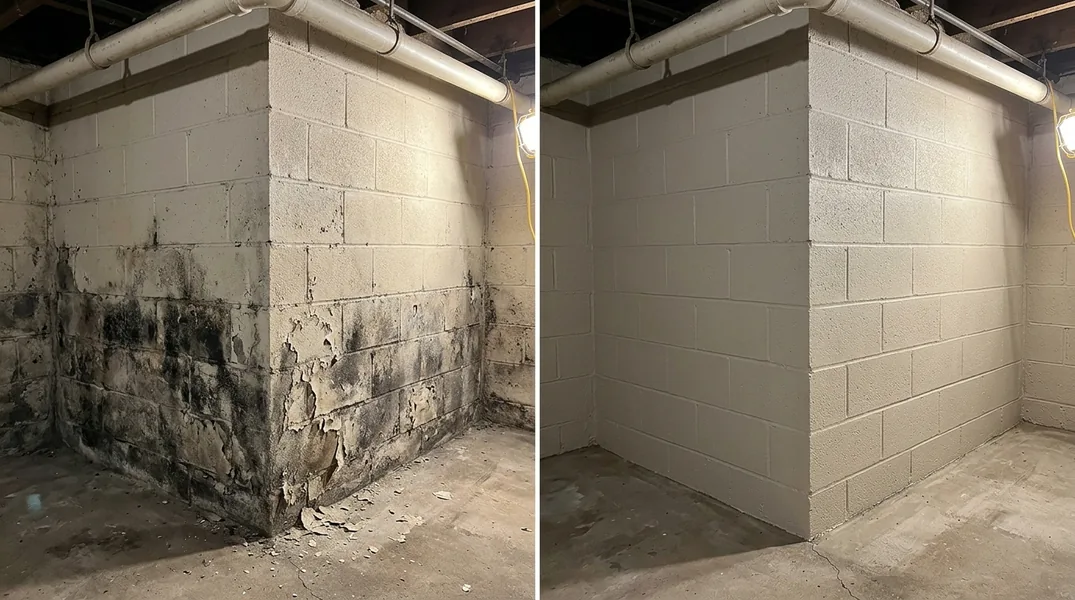
Why Bridgewater Basements Face Unique Waterproofing Challenges
Homeowners in Bridgewater deal with a set of soil and weather conditions that make basement moisture a near-universal concern. Much of the area sits on lowland clay and silt deposits left behind by ancient river activity, and clay is notoriously slow to absorb water. Instead of draining away, rainwater pools against foundation walls and creates hydrostatic pressure that pushes moisture through concrete pores and hairline cracks. Add in the freeze-thaw cycles of a central New Jersey winter and the heavy spring downpours that roll through the Raritan Valley, and you have a recipe for damp basements, efflorescence, and occasional seepage.
That local geology is why a generic, one-size-fits-all approach rarely works here. A solution that performs well on sandy coastal soils may underperform in Somerville or Raritan, where the same lowland clay behavior shows up. Understanding whether you need to manage water from the inside or stop it from the outside is the central question, and it is exactly what the interior vs exterior waterproofing debate comes down to. The right answer depends on your foundation type, the severity of the leak, your landscaping, and your budget.
How Interior Waterproofing Works: Drain Tile and Sump Systems
An Interior Drain Tile System is installed along the inside perimeter of your basement footing. The crew breaks up a narrow strip of the concrete floor, digs a trench down to the footing, and lays perforated pipe in washed stone. That pipe channels incoming groundwater to a sump pit, where a pump lifts it out and away from the house. The floor is then patched, and the system is often finished with a wall vapor barrier and a sealed lid. Because the work happens indoors, it is unaffected by weather and can be completed year-round without digging up your yard, driveway, or landscaping.
Interior systems excel at managing water that has already entered the basement block or crept over the footing. They relieve hydrostatic pressure at the most vulnerable point and are highly effective for the clay-heavy soils common in Manville and surrounding neighborhoods. The tradeoff is that interior waterproofing manages water rather than blocking it at the source, so the exterior soil still gets wet. For many homeowners, though, that is a perfectly acceptable tradeoff given the lower disruption and typically more accessible pricing.
How Exterior Waterproofing Works: Membranes and Footing Drains
Exterior Basement Waterproofing attacks the problem from the outside. The crew excavates down to the footing, cleans and repairs the foundation wall, and applies a waterproof membrane or coating to the exterior surface. A footing drain is installed at the base, and the excavation is backfilled with gravel and drainage material to direct water away from the wall. This approach stops water before it ever reaches the concrete, which makes it the gold standard for stopping bulk water intrusion and relieving pressure on the structure itself.
The catch is cost and disruption. Exterior work means digging up decks, patios, walkways, and mature landscaping, and it is weather-dependent. It also may not be feasible on lots with tight property lines or shared driveways. That said, when a foundation has significant structural movement, widespread wall seepage, or recurring problems that interior systems have not solved, exterior waterproofing is often the more durable long-term fix. For homeowners weighing drain tile vs exterior membrane, the honest answer is that each shines in different scenarios, and a professional assessment is the only way to know which fits your home.
Interior vs Exterior Waterproofing: A Side-by-Side Comparison
When homeowners ask for a waterproofing comparison, the conversation usually centers on four factors: effectiveness, disruption, timeline, and budget. Interior drain tile is fast to install (often one to three days), keeps your yard intact, works in any season, and generally costs less upfront. It is excellent at handling seepage and hydrostatic pressure once water reaches the footing. Exterior membrane systems are more thorough at keeping water out of the wall assembly entirely, but they require excavation, take longer, cost more, and can be limited by site access and weather.
There is also a maintenance dimension. Interior systems rely on a sump pump, which needs a backup power source during storms, a real consideration in Bridgewater where summer thunderstorms can knock out power. Exterior systems have fewer mechanical parts but are harder to inspect or service once backfilled. Many homes actually benefit from a hybrid approach: exterior drainage where feasible plus interior drain tile as a secondary line of defense. A reputable contractor will evaluate your foundation type, grading, gutter discharge, and leak history before recommending a path, rather than pushing whichever system is easiest to sell.
Basement Waterproofing Cost in Bridgewater: What to Budget
Cost is the question every homeowner asks, and the honest answer is that it varies widely based on linear footage, foundation condition, accessibility, and whether you choose interior, exterior, or a combination. Interior drain tile with a sump system is typically the more budget-friendly option, while full exterior excavation and membrane work commands a higher investment because of the labor and restoration involved. Rather than quoting a single number that may not apply to your home, a professional should walk the property, inspect the foundation, and provide a written scope with transparent pricing before any work begins.
It also helps to think about cost in terms of value over time. A properly installed system protects finished basement space, prevents mold and musty odors, and preserves foundation integrity, all of which protect your home's resale value in the Bridgewater market. Skipping waterproofing or choosing the cheapest patch often leads to repeat repairs and bigger bills later. Ask about warranties, sump pump quality, and whether the quote includes restoration of floors and landscaping. A clear, itemized proposal is a sign you are working with a company that stands behind its work.
Basement Waterproofing Near Me: When to Call a Bridgewater Pro
If you are searching for basement waterproofing near me in the Bridgewater area, there are clear signals it is time to call. Persistent dampness or a musty smell, white powdery efflorescence on the walls, water staining at the base of the foundation, cracks that seem to widen, or a sump pump that runs constantly all point to an active moisture problem. Waiting rarely makes it better, especially with clay soils that hold water against the foundation for days after a storm. Early intervention is almost always less expensive than remediation after mold or structural damage sets in.
Bridgewater Waterproofing serves homeowners throughout Bridgewater and the surrounding communities, and we start every project with a thorough inspection and a straightforward explanation of your options. Whether you lean toward interior drain tile or exterior membrane work, we will help you understand the tradeoffs and choose the system that fits your home and budget. Call (908) 503-5451 or request a free estimate today, and let us help you keep your basement dry through every New Jersey season.
Looking for a professional basement waterproofing contractor in Bridgewater? Bridgewater Waterproofing responds fast for all your basement waterproofing needs.
Get a Free QuoteOur services: Basement Waterproofing · Interior Drain Tile System · Exterior Basement Waterproofing