Why Older Homes in Bridgewater Are Prone to Foundation Issues
Homes built in Bridgewater decades ago, whether from the mid-20th century or earlier, were constructed with materials and methods that simply do not hold up the same way modern foundations do. Many of these homes sit on poured concrete or block masonry foundations that have spent 50 to 100 years absorbing moisture from New Jersey's freeze-thaw cycles. Each winter, water seeps into tiny pores, freezes, expands, and then thaws, gradually weakening the concrete and widening existing hairline cracks. Over time, this cycle creates real structural vulnerabilities that homeowners need to recognize before they become expensive emergencies.
Beyond the climate, older neighborhoods in and around Bridgewater often have mature landscaping and aging drainage systems. Tree roots can invade foundation drains, and original gutter systems may have long since failed, directing water straight down along the foundation rather than away from it. Soil settlement is another factor: as the ground around an older home compacts unevenly, the foundation can shift, leading to the classic signs of foundation problems that every homeowner should know. Understanding these local conditions is the first step toward protecting your investment.
Basement Wall Cracks: What's Normal and What's Not
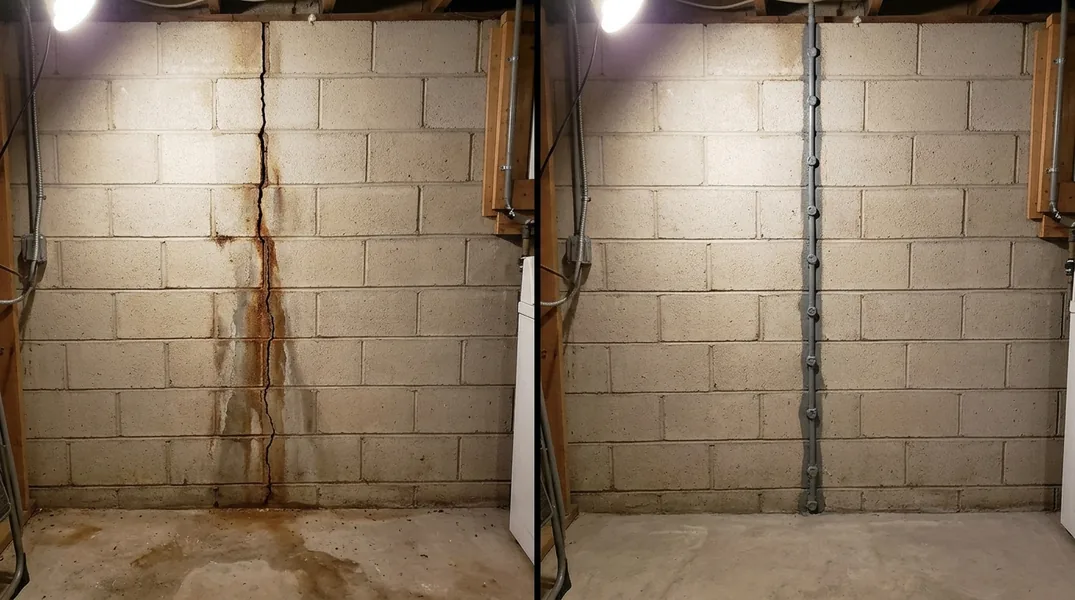
Not every crack in a basement wall is a crisis, but in older homes, certain patterns should raise a red flag. Hairline vertical cracks, especially those that appear near the corners of windows or in the middle of a long wall, are often caused by normal concrete shrinkage during the curing process and may be relatively stable. However, if those cracks are wider than an eighth of an inch, have a stair-step pattern, or are accompanied by moisture staining, they are no longer cosmetic. Horizontal cracks are particularly concerning because they often indicate soil pressure pushing against the wall from the outside, a condition that can lead to a bowing basement wall if left unaddressed.
Homeowners should also pay attention to cracks that seem to be growing. A simple way to monitor them is to mark the ends of a crack with a pencil and date it, then check back in a few months. If the crack has extended, it is time to bring in a professional. Ignoring active cracks in an older home foundation is risky because water intrusion will accelerate the deterioration, and what starts as a minor seep can turn into a structural repair project. A thorough inspection by a local specialist can determine whether the cracks are settlement-related, pressure-related, or simply age-related shrinkage.
Bowing Basement Walls and Other Structural Warning Signs
A bowing basement wall is one of the most serious signs of foundation trouble in older homes. You might notice the wall leaning inward at the top or bulging in the middle, and in severe cases, you can actually see a gap between the wall and the floor joists above. This happens when hydrostatic pressure from saturated soil outside the foundation becomes too great for the wall to resist, often after years of poor drainage. In Bridgewater's climate, where spring rains can be heavy and prolonged, this pressure builds up quickly. Other structural warning signs include doors and windows that suddenly stick or no longer latch properly, floors that feel uneven or bouncy, and cracks appearing in the drywall above door frames on the main level.
These symptoms are often connected. When the foundation moves, the entire frame of the house can distort, which is why interior doors may swing open on their own or why you might notice gaps around window frames that were not there before. For historic homes, the stakes are even higher because the construction methods may not tolerate movement as well as modern engineered foundations. If you observe any of these issues, it is wise to schedule a free estimate with a foundation professional who can assess the severity and recommend the right course of action, whether that involves Basement Waterproofing or more targeted structural repairs.
Historic Home Waterproofing: Special Considerations for Older Properties
Older and historic homes in the Bridgewater area often have distinct waterproofing needs that differ from modern construction. Many were built with rubble stone or brick foundations that were never designed to be fully waterproof, relying instead on exterior drainage and breathable materials. Applying modern sealants or rigid waterproofing membranes to these surfaces without proper assessment can trap moisture and cause spalling or efflorescence. A knowledgeable contractor will evaluate the foundation type, the drainage patterns around the home, and the interior conditions before recommending a solution. In some cases, an Interior Drain Tile System is the least invasive and most effective way to manage water without disturbing the historic exterior.
For homes where exterior excavation is feasible and appropriate, Exterior Basement Waterproofing can address the root cause by redirecting groundwater away from the foundation before it ever reaches the basement. The right approach depends on the home's age, construction, and the specific water issues you are seeing. Historic home waterproofing is not a one-size-fits-all project, and working with a local company that understands the building stock in towns like Somerville and Raritan can make a significant difference in the outcome.
When to Call a Professional for Foundation Problems Near Me
If you have spotted any of the warning signs discussed above, it is time to stop researching and start calling. Foundation problems do not resolve on their own, and in older homes, they tend to worsen faster once water finds a path. A professional assessment will typically include a visual inspection of the basement walls, floors, and exterior grading, along with moisture readings and an evaluation of the drainage system. The goal is to identify the cause of the problem, not just the symptom, so that the repair addresses the underlying issue. Homeowners in Manville and throughout the region can benefit from a local expert who has seen these patterns in hundreds of homes.
Bridgewater Waterproofing offers comprehensive evaluations and can explain your options in plain language, without pressure. Whether you need a simple crack repair, a full drainage solution, or a structural assessment for a bowing wall, the first step is a conversation. Call (908) 503-5451 to speak with a team member, or visit the website to request a free estimate. Protecting an older home starts with awareness, and you have already taken that first step by learning what to look for below grade.
Looking for a professional basement waterproofing contractor in Bridgewater? Bridgewater Waterproofing responds fast for all your basement waterproofing needs.
Get a Free QuoteOur services: Basement Waterproofing · Interior Drain Tile System · Exterior Basement Waterproofing